
Testimony Becomes Practical Solidarity
The Vagina MonologuesThis thread follows the movement from stories of violence toward support for organizations addressing the distinct conditions women face in different communities.
increasing Bearing strength in each event
 decreasing
Bearing strength in each eventdecreasingRecognizing a Pattern

Recognizing a Pattern
Accounts that converge
After performances, women told Ensler about rape, incest, domestic abuse, and other forms of violence. Their stories came from different lives, but the recurrence of violence made it difficult to regard each account as an exception.
Ensler describes feeling that she was learning things she was not supposed to know. The disclosures challenged public silence and made the consequences of that silence increasingly difficult for her to ignore.
A question of responsibility
The stories shifted Ensler’s focus from hearing and performing testimony to asking what could be done to stop the violence. She understood the desecration of women as a failure to honor and protect life, with consequences that reached far beyond individual survivors.
That conclusion supplied the moral urgency behind the organizing that followed. The performance could give stories an audience, but the larger problem required sustained support and action.
Bosnian Women’s Testimony
Bosnian Women’s Testimony
A newspaper photograph
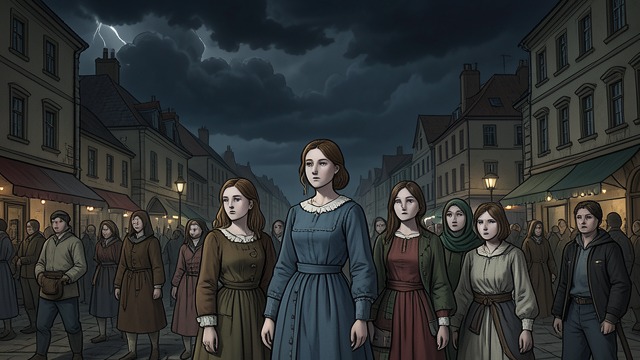
In 1993, Ensler saw a photograph of young women returning from a rape camp in Bosnia. Their visible shock led her to seek a fuller understanding of their experiences rather than remain a distant observer of the news.
With support, she traveled in 1994 to Croatia and Pakistan, where she interviewed Bosnian women refugees and spent time with them in camps, cafés, and refugee centers.
Naming wartime rape
Ensler describes being outraged that women were being raped as a systematic tactic of war while the violence continued without effective intervention. The women’s accounts connected intimate bodily violation to organized conflict and the failure of the international response.
The resulting monologue, “My Vagina Was My Village,” centers one woman’s story and the loss of the place she once experienced as home. Its movement from green fields and familiar life to invasion and estrangement gives the testimony a deeply personal scale.
A Different Need in Each Place

A Different Need in Each Place
Local conditions shape the work
As V-Day developed, its fundraising supported organizations responding to different forms of danger and different local needs. The book describes work connected to women living under severe restrictions, survivors of wartime rape, and girls at risk of genital cutting.
The examples resist the idea that a single intervention could address every form of violence. Each group worked within its own conditions and required support suited to its work on the ground.
From awareness to material support
V-Day’s stated role was to distribute resources and raise public awareness. This practical side extended the meaning of performance: an audience’s attention could become funding for local groups seeking safety, education, or crisis services.
The movement’s solidarity therefore depended on recognizing difference rather than flattening it. Its public message connected struggles, while its grants supported organizations responding to specific circumstances.
Alternative Coming-of-Age Ritual
Alternative Coming-of-Age Ritual
A community-based response
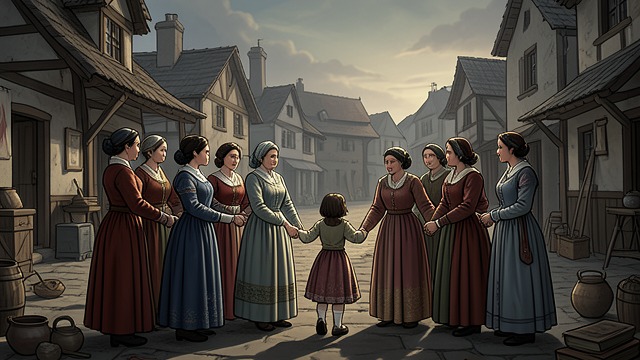
The book describes V-Day support for Tasaru Ntomonok and Mandeolo, which were working to stop genital cutting of girls by introducing a coming-of-age ritual without the cut. Their approach paired prevention with an alternative form of communal recognition.
The account presents the work as sustained education and prevention rather than a single dramatic intervention. Support for practical travel between villages helped the project continue reaching people in different communities.
Redirecting the tradition
The alternative ritual matters because it addresses the social meaning attached to cutting as well as the physical act itself. By offering another way to mark a transition, the project sought to make change possible without leaving the community without a shared ceremony.
In the larger movement, this example shows how local knowledge could shape action. The goal was not simply to denounce a practice from afar, but to support people developing a viable alternative within the setting where the practice occurred.
Building a Rape Crisis Center
Building a Rape Crisis Center
Support for survivors
V-Day worked with the Center for Women War Victims in Zagreb, with the stated goal of helping it open the first rape crisis center in the former Yugoslavia. The support was also intended to help train women to work with survivors in other areas affected by war.
The account connects present support with the continuing effects of wartime sexual violence. Survivors needed services and trained advocates after the immediate attention of conflict had passed.
A network of care
The proposed center represented a concrete form of solidarity: resources could help create a place where survivors received support and where local women could develop expertise for work beyond one city.
This initiative complements the book’s insistence on testimony. Making violence visible is necessary, but the stories also point toward institutions that can respond to the people who live with its consequences.
During Ensler’s travels before the founding of V-Day
1993 to 1994
As V-Day began supporting groups beyond its first events
During V-Day’s early support for work in Kenya
During V-Day’s early support for work in Croatia
